
Phoenix Commercial Lease Negotiations in 2027
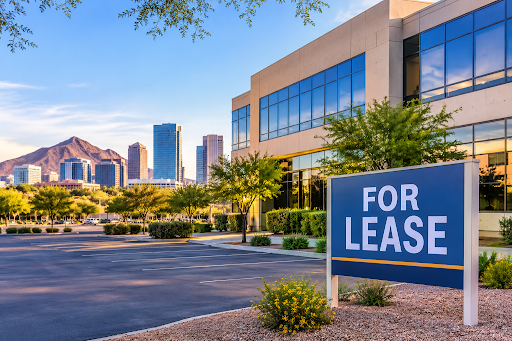
Our guide to the steps in a commercial real estate transaction covers the path from planning your move to closing the deal. This article zooms in on the negotiation stage, where market conditions often matter more than any single clause.
Phoenix has no single commercial market right now. Office, industrial, and retail properties are each running on their own supply and demand, and that changes who holds the leverage. Here is where Phoenix commercial lease negotiations stand heading into 2027.
How Are Phoenix Commercial Lease Negotiations Changing?
Third quarter 2026 market data from CommercialCafe’s office and industrial reports and from MMCG Invest shows how uneven the Phoenix commercial leasing market has become:
- Office vacancy: 17.7%
- Industrial vacancy: 9.9%
- Retail vacancy: 4.6%
- Retail asking rent growth: 4.4% year over year
Nearly 18% of office space sits vacant, while industrial space is well below that and retail space is scarce, with asking rents still climbing. A tenant shopping for an office can often negotiate from a position of strength, while a retailer in the same city may be one of several businesses chasing the same storefront. Landlords face the mirror image of that.
These conditions shape Arizona commercial lease agreements from the first draft. Concessions, rent structures, and flexibility provisions all look different depending on the property type and how many other parties want the space.
What Phoenix Office Market Conditions Mean for Commercial Tenants
With nearly 18% of office space vacant, tenants have choices, and landlords are aware of it. Owners with empty floors tend to work harder to fill them or to keep the tenants they already have.
In practice, that can mean:
- Larger tenant improvement allowances
- Free rent at the start of the lease
- Incentives for tenants who renew
- More flexibility on expansion, contraction, or early exit
A high vacancy rate does not make every deal a bargain. Well-located, high-quality buildings still draw interest, and their owners know what they have. The best results go to tenants who understand what comparable Phoenix commercial property leases are offering and who ask for specific concessions instead of a general discount.
Landlords have their own work to do. With this much available space, a clear leasing strategy, competitive concessions, and a well-presented property often decide whether a space leases in months or sits vacant for years.
Industrial Leasing: Why Location and Timing Matter
Industrial vacancy of 9.9% is well below the office rate, and the buildings tenants want most can be hard to land. Companies that need warehouse or distribution space have to weigh more than the rent per square foot. Loading access, dock configuration, ceiling clear heights, power capacity, and distance to major freeways and customers all affect daily operations and long-term costs. Power in particular can decide a site’s timeline, which we cover in Arizona Industrial Real Estate: Power Is the New Water.
When good options are limited, timing becomes part of the negotiation. A tenant who starts looking only when the current lease is about to expire may find fewer buildings available and little leverage to bargain. Starting earlier gives you time to compare properties and walk away from a deal that does not fit. Landlords with well-located industrial space hold an advantage, but they still do better with reasonable terms that keep good tenants in place. If you are searching, see how our team approaches industrial properties in Phoenix.
Contact Rowe & Associates Now
Phoenix CRE Lease Negotiations: Competing for Space in a Tight Market
Retail is the tightest of the three. With vacancy at 4.6% and asking rents up 4.4% from last year, businesses looking for strong storefronts, particularly in growing residential areas, are up against real competition.
Tenants in this segment need to move quickly and know their priorities before they tour a single space. Visibility, parking, co-tenancy, and permitted use can matter as much as base rent. Permitted use deserves extra attention, since zoning can rule out a space that otherwise looks perfect. Our Phoenix CRE broker’s guide to zoning explains what to check before you commit.
Because landlords have less reason to offer concessions in a market this tight, the smaller terms in the deal deserve a closer read. Decide early what location and layout your business needs, what you can afford, and where you can compromise.
Five Commercial Lease Terms Worth Negotiating
Regardless of property type, these five areas deserve attention in any set of commercial lease negotiation strategies.
1. Tenant improvement allowances. Find out who pays for build-outs and renovations, how much the landlord will contribute, and what happens to any portion of the allowance you do not use. Settling this early prevents expensive surprises later.
2. Rent escalations. Annual increases compound. Over a five- or ten-year lease, the gap between a modest fixed bump and a larger percentage increase adds up to a meaningful amount of total occupancy cost.
3. Renewal options. Check whether the lease gives you the right to renew and how future rent will be set. Without a defined process, you may have little leverage when the term ends.
4. Early termination and expansion rights. Businesses grow, shrink, and change direction. A lease that allows you to expand, reduce your space, or exit under defined conditions protects you if your plans shift.
5. Free rent and concessions. Landlords sometimes offer free rent or other incentives to win a new tenant or keep a current one. How likely that is depends on the market conditions described above.
These are business and financial points a broker can help you evaluate. For interpretation of specific lease language, consult your attorney.
Should You Renew Your Commercial Lease or Relocate?
Many tenants renew by default because it feels simpler. Simpler does not always mean cheaper, and a commercial lease renewal in Phoenix deserves the same scrutiny as a new deal.
Compare the full picture, not just the new rent figure. Staying means negotiating a renewal rate, possibly refreshing the space, and avoiding disruption to your business. Moving adds relocation costs, build-out expenses, possible downtime, and the work of setting up somewhere new. Against that, a different property might offer a better location, a more efficient layout, or a stronger incentive package than your current landlord will match.
Our guide to finding the best Phoenix business location walks through the factors worth weighing, and why leasing commercial space in Phoenix makes sense covers the flexibility leasing offers.
The most effective approach is to explore both options at the same time. Even if you expect to renew, knowing what else is on the market gives you real bargaining power, and landlords respond differently to a tenant who has done that research.
How a Phoenix CRE Broker Can Help You Negotiate Better Lease Terms
A commercial real estate broker brings market knowledge that is hard to gather on your own. That includes what comparable properties are asking, which concessions are realistic right now, and how a given landlord is likely to respond.
This is the core of commercial real estate tenant representation. Your broker works for you, not the property owner, and helps you define your needs, identify suitable spaces, and push for terms that fit your budget and growth plans.
At Rowe and Associates, Sam, our Phoenix CRE Advisory Consultant, helps clients evaluate properties, compare lease options side by side, and negotiate agreements that support their business goals. He works with both tenants searching for space and landlords looking to attract the right occupant. You can see the full range of services on our commercial real estate in Phoenix page.
FAQs About Phoenix Commercial Lease Negotiations in 2027
Yes. Rent, concessions, improvement allowances, renewal rights, and many other terms are commonly negotiated. How much room you have depends on your property type and current market conditions.
With office vacancy near 18% in September 2026, tenants generally have more options and more negotiating power than in a tighter market. Individual buildings and submarkets vary, so local guidance helps.
No, but a broker can provide market data, identify alternatives, and negotiate on your behalf. Tenant representation is commonly paid by the landlord, so it often costs the tenant nothing directly.
Call Rowe and Associates to Help with Phoenix Commercial Lease Negotiations
If your lease is coming up for renewal, or you are searching for office, industrial, or retail space in the Phoenix area, contact Sam and the team at Rowe and Associates. We will review your situation, explain what the current market means for your negotiating position, and help you pursue terms that work for your business.
Call us at (480) 933-0004 or contact us online to get started.
Market statistics are drawn from third quarter 2026 data published by CommercialCafe (office and industrial, as of September) and MMCG Invest (retail). Figures vary by data provider and methodology. This article is for general informational purposes and is not legal advice.